

24 Hour Residential Backup Power Requirement Effective February 13, 2019
The Federal Communications Commission’s residential 24 hour backup power requirement becomes effective February 13, 2019. The rule requires providers of facilities-based, fixed residential voice services that are not line powered to offer subscribers, at the point of sale, the option to purchase a backup power solution that provides consumers with at least 24 hours of standby power during a commercial power outage.


Winter Is Here: FCC Extends Jurisdictional Separations Freeze For Another Six Years!
The Federal Communications Commission has released a Report and Order and Waiver that extends the existing freeze on jurisdictional separations for up to another six years. During this time, the Commission and the Joint Board will focus on substantive, incremental reform. As a first step in this process, rate-of-return carriers that elected to freeze their separations category relationships in 2001 will be allowed to opt out of that freeze.

FCC Replaces Rate-Of-Return Competitive Overlap Process With Reverse Auction System
The Federal Communications Commission has approved and released a Report and Order and Further Notice of Proposed Rulemaking that revises many universal service fund rules that apply to rate-of-return incumbent local exchange carriers. Among other things, in the order the FCC replaces the existing overlap process that applies to legacy rate-of-return service areas that are served by unsubsidized competitors with competitive auctions.

Rate-Of-Return Broadband Order: FCC Eliminates Capital Investment Allowance, Simplifies Budget Control Mechanism, And Reduces Monthly Per-Line Limit On Support
The Federal Communications Commission has approved and released a Report and Order and Further Notice of Proposed Rulemaking that revises many universal service fund (USF) rules that apply to rate-of-return incumbent local exchange carriers. Among other things, the FCC’s order eliminates the capital investment allowance; simplifies the budget control mechanism calculation and eliminates the per-line reduction calculation that is part of the budget control mechanism; and reduces the monthly per-line limit on universal service support to $225 and then to $200.


FCC’s Draft Rural Broadband Order Attempts To Fix Inadequate Legacy USF Budget
The FCC has released a draft rural broadband order that will be considered at the FCC’s December open meeting. In the draft order, the FCC adopts a new universal service fund budget for rate-of-return carriers subject to legacy cost-based rules that is based on uncapped 2018 claims, increased annually by inflation. The increased budget comes with the condition that support recipients with deployment obligations provide broadband service at speeds of 25/3 Mbps rather than 10/1 Mbps.
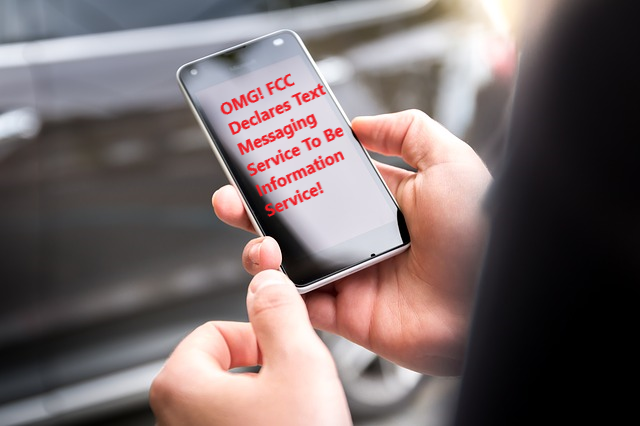
FCC To Declare Text Messaging Service A Title I Information Service
At its December 12, 2018, open meeting, the Federal Communications Commission will classify text messaging service as a Title I service under the Communications Act. The FCC’s Declaratory Ruling will undoubtedly have a negative impact on universal service fund contributions.

A-CAM II: A New Model Offer for “Legacy” Rate-of-Return Carriers
The FCC has released a draft order that revises universal service fund rules that apply to rate-of-return incumbent local exchange carriers. In the order, the FCC offers model-based USF support to all rate-of-return carriers currently subject to “legacy” cost-based rules. The new model offer – A-CAM II –is similar to the original A-CAM offer but with several critical adjustments.