Kansas Broadband & Telecom News – September 2026
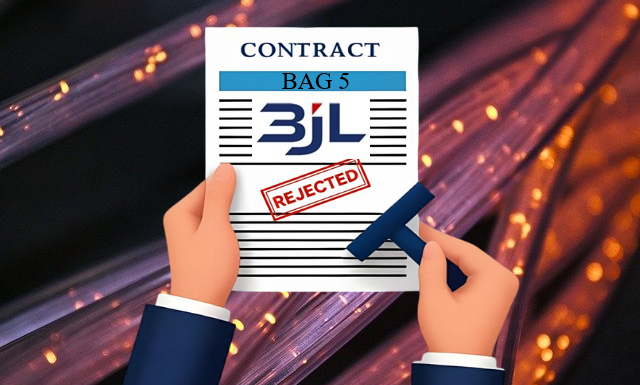
KOBD Agrees To Terminate 3JL Holdings, LLC’s Broadband Acceleration Grants
September 25, 2026 – The Kansas Office of Broadband Development (KOBD) has agreed to release 3JL Holdings, LLC from its obligations under the fifth round of the Kansas Broadband Acceleration Grant (BAG) program. In August, 3JL Holdings sent a formal letter to KOBD requesting a release from its BAG 5.0 grant agreement. As a result of KOBD’s decision, 3JL Holdings’ BAG 5 obligations and award funding have been rescinded and terminated.
3JL Holdings was awarded a total of $2,876,974 for two broadband projects under BAG 5 – $1,494,288 to provide broadband service to 161 homes and businesses in Anderson County, and $1,382,686 to provide broadband service to 124 homes and businesses in Woodson County. The awards were announced by KOBD on December 31, 2025. No BAG 5 funding was requested by or disbursed to 3JL Holdings.
3JL Holdings purportedly requested a rescission of its BAG 5 awards so it could focus its resources toward successfully completing its Broadband Equity, Access and Deployment (BEAD) program projects. The company was awarded a total of $58,556,500 in BEAD funding to serve 3,146 locations in Kansas (cost per location of $18,613). It’s worth noting however, that private entities that applied for BAG 5 funding were required to certify that they have been operating in the state of Kansas for three years or more. 3JL Holdings was formed as a Kansas limited liability company on October 30, 2025 – one day before the BAG 5 application window closed on October 31, 2025 at 5:00 pm.
Brightspeed Companies Of Kansas Revise Tariff Terms Applicable To ISDN-PRI Term Discount Plans For Business Customers
September 23, 2026 – The Brightspeed Companies of Kansas have filed revisions to their General Exchange Service Tariff with the Kansas Corporation Commission (KCC). The Brightspeed Companies of Kansas’ tariff filing “revises the terms and conditions applicable to ISDN-PRI Term Discount Plans for business customers,” with a requested effective date of October 23, 2026. Brightspeed notes that it “is a price-cap regulated carrier and makes this tariff filing in accordance with K.S.A. 2005(q)(1)(F) which declared the services contained herein as price deregulated.” The KCC Docket Number for the proceeding is 27-UTDT-0164-TAR.
KCC Opens Kansas Universal Service Fund Year 31 Docket
September 22, 2026 – The Kansas Corporation Commission (KCC) has issued an order opening a docket to determine the assessment rate for the Thirty-First Year of the Kansas Universal Service Fund (KUSF) (March 2027 – February 2028). The docket also will be used to determine the residential and single line business affordable rates for local exchange services provided by rural telephone companies subject to traditional rate-of-return regulation pursuant to K.S.A. 66-2005(e). The KCC Docket Number for the proceeding is 27-GIMT-0155-GIT. All carriers contributing to, and all carriers receiving distributions from the KUSF parties to the docket. Carriers must file their information in the docket utilizing the forms that are available for download from the KCC’s website. A carrier not submitting the required data in a timely manner may be subject to penalties pursuant to K.S.A. 66-138. The KCC has adopted the following procedural schedule for this proceeding:
October 19, 2026 – Companies File Data
December 18, 2026 – Staff Files Direct Testimony
December 30, 2026 – Intervenors File Testimony
January 11, 2027 – Staff Files Reply Testimony, If Needed
January 22, 2027 At 9 A.M. Via Zoom – Evidentiary Hearing, If Needed
By January 31, 2027 – Order Adopting Year 31 Rates
Another New Record! USF Contribution Factor For Fourth Quarter Of 2026 – 42%
September 14, 2026 – The FCC’s Office of Managing Director (OMD) has announced that the proposed universal service fund (USF) contribution factor for the fourth quarter of 2026 will be 42 percent. If the FCC takes no action on the proposed USF contribution factor within 14 days, it will be declared approved.
The 42% contribution factor for 4Q 2026 is a new all-time high. The previous record for the highest USF contribution factor was 38.8% which was used last quarter. Also, for the first time ever, the USF contribution factor has broken through 40%. Historical information on quarterly universal service fund contribution factors is available online from the FCC.
For the fourth quarter of 2026, the Universal Service Administrative Company (USAC) projects $6.909925 billion in total interstate and international end-user telecommunications revenues will be collected (3Q was $7.221914; 2Q was $7.553337, and 1Q was $7.604471).
USAC estimates that $2.026190 billion is needed to cover the total demand and expenses for all Federal universal service support mechanisms (revenue requirement) in the fourth quarter of 2026 (3Q was $2.003130, 2Q was $2.022700, and 1Q was $2.060770). Total fourth quarter 2026 demand includes projected program support, administrative expenses, and true-ups and adjustments, which breaks out among the USF support mechanisms as follows:
E-Rate Schools & Libraries: $627.85 million (3Q was $550.73 million, 2Q was $641.92 million, and 1Q was $648.93 million)
Rural Health Care: $132.78 million (3Q was $183.04 million, 2Q was $178.84 million, and 1Q was $181.11 million)
High-Cost: $1.07877 billion (3Q was $1.07906 billion, 2Q was $1.01156 billion, and 1Q was $1.00545 billion)
Lifeline: $186.79 million (3Q was $190.30 million, 2Q was $190.38 million, and 1Q was $225.28 million)
FCC Announces Tentative Agenda For September 30th Open Meeting
September 9, 2026 – Federal Communications Commission Chairman Brendan Carr has announced the following tentative agenda for the FCC’s next open meeting scheduled for Wednesday, September 30, 2026:
Modernizing the Commission’s National Environmental Policy Act Rules – The Commission will consider a Report and Order and Further Notice of Proposed Rulemaking to overhaul the Commission’s outdated National Environmental Policy Act (NEPA) rules. These reforms will clarify the scope of Commission actions subject to environmental review and streamline and expedite the review process to ensure NEPA serves as a tool for informed decision-making rather than a barrier to investment, innovation, and connectivity. (WT Docket No. 25-217)
Unlocking Satellite Spectrum Abundance – The Commission will consider a Report and Order and Order of Proposed Modification and two Further Notices of Proposed Rulemaking that would increase the amount of spectrum available in order to support innovation in the American space economy. The Order would unlock more than 1,000 megahertz of spectrum in the 12.7 GHz and 42 GHz bands to provide greater capacity for satellite broadband to the home or for in-flight connectivity and the like. One FNPRM would seek comment on unlocking an additional 1,175 megahertz of spectrum in the Ku- and Ka-bands and 138.25 gigahertz in the D-band for more intensive use by satellite communications. The other FNPRM would seek comment on three new bands across thousands of megahertz that might be able to be used to control spacecraft or to provide data communications in support of emergent space activities, such as in-space servicing, assembly, and manufacturing. (SB Docket Nos. 25-180, 26-54; GN Docket Nos. 14-77, 22-352; WT Docket No. 23-158)
Unleashing the Power of Unlicensed UWB Devices – The Commission will consider a Notice of Proposed Rulemaking that would modernize the rules for unlicensed Ultra-Wideband (UWB) devices. UWB devices operate under part 15 of the Commission's rules and support a wide variety of applications, including automobile sensors, door locks, ground- and wall-penetrating radars, and location tracking for NFL players during games. The NPRM would modernize the UWB rules by updating definitions, measurement procedures, technical parameters, and outdated restrictions, while removing unnecessary coordination requirements. The NPRM would also create a new UWB device category for emerging applications like AI-enabled sensing, and overall seek to future-proof UWB regulations for the next wave of innovation while maintaining protections for incumbent services. (ET Docket No. 26-245)
Modernizing the 911 Framework – The Commission will consider a Notice of Inquiry exploring modernization of the 911 framework to ensure the public can continue to effectively and reliably access emergency services in this era of rapid technological change. (PS Docket No. 26-197)
Enhancing the Ability of Consumers to Control Which Calls That They Wish to Receive – The Commission will consider a Report and Order and Further Notice of Proposed Rulemaking modernizing its Telephone Consumer Protection Act rules to ensure that consumers have easily accessible ways to opt-out of robocalls while streamlining callers’ ability to process consent revocation requests. (CG Docket No. 02-278)
The FCC’s Wednesday, September 30, 2026 open meeting is scheduled to commence at 10:30 a.m. ET in the Commission Meeting Room of the Federal Communications Commission, 45 L Street, N.E., Washington, D.C. The meeting is open to the public, but the FCC headquarters building is not open access, and all guests must check in with and be screened by FCC security at the main entrance on L Street. All FCC open meetings are streamed live at www.fcc.gov/live.
NTIA Announces Supplemental Round Of BEAD Program Funding
September 3, 2026 – The National Telecommunications and Information Administration (NTIA) has announced a new round of funding under the Broadband Equity, Access, and Deployment (BEAD) program will be made available. The new round will allow states “to access additional BEAD funding to address locations that may remain unserved due to defaults in other federal and/or state programs, misreporting by providers, and other changes to the Federal Communication Commission’s (FCC) broadband DATA maps since the completion of Final Proposals.” NTIA has released a BEAD Supplemental Deployment Policy Notice which outlines the requirements and processes for the new funding round.
First, NTIA will provide each state with a list of unserved locations not addressed by the state’s Final Proposal (the Supplemental BEAD Eligible Location List). States will have 30 days to review the list and potentially remove locations subject to state or local enforceable funding commitments or other reasons. States must then publish the list of locations and hold a 30-day abbreviated challenge process which will only be used to remove locations from the Supplemental BEAD Eligible Location List. There will be no rebuttal round. States will submit a final location list to NTIA. Thereafter, NTIA will determine the amount of additional funding that should be released to each state to cover broadband deployment to their final Supplemental BEAD Eligible Location Lists. Once NTIA approves a state’s final location list and sets the total funding amount, the state has 90 days to conduct a second benefit of the bargain round. States must then send NTIA a Supplemental Deployment Plan and proposed budget modification. NTIA then has 90 days to approve a state’s Supplemental Deployment Plan.
AT&T Kansas To Discontinue Certain Legacy TDM-Based Voice Services In Portions Of Certain Kansas Wire Centers
September 1, 2026 – AT&T Services, Inc., on behalf of its affiliates, including Southwestern Bell Telephone Company, LLC, d/b/a AT&T Kansas, has filed a Section 63.71 application with the Federal Communications Commission (FCC) for approval to discontinue services. Specifically, AT&T is seeking to discontinue, on or after September 1, 2027, AT&T Residential Local Service and AT&T Business Local Exchange Access Line Service – legacy POTS voice services – provided to approximately 35,000 customers in portions of certain wire centers located in AT&T’s ILEC footprint in 19 states.
Customers affected by the discontinuance will have access to AT&T’s AT&T Phone – Advanced and AT&T Phone for Business – Advanced. AT&T has requested that the FCC conclude that those are adequate replacements for residential and business POTS under the Adequate Replacement Test outlined in the FCC’s 2016 Tech Transitions Order. AT&T notes that the FCC has reached that conclusions in past AT&T discontinuance applications. Additionally, affected customers have other options for voice service, including voice service from cable, fiber, fixed wireless, and satellite technologies. In Kansas, AT&T is seeking discontinuance in certain areas currently served by the following wire centers:
ABILENE (ABLNKSCD), ANTHONY (ANTHKSWS), ARKANSAS CITY (ARCYKSSO), ATCHISON (ATSNKSSF), BUCKLIN (BCKLKSSM), CANEY (CANYKS05), CEDARVALE (CDVAKSPL), CHANUTE (CHNTKSSS), CHAPMAN (CPMNKS04), CHERRYVALE (CHVAKSEM), CHETOPA (CHTPKSBE), DESOTO (DESTKSLU), DOUGLASS (DGLSKSPI), ELDORADO (ELDOKSST), ENTERPRISE (ENTRKSCT), ERIE (ERIEKSCI), EUDORA (EUDRKSKI), FORT SCOTT (FTSCKS01), GREENSBURG (GNBGKSFL), GYPSUM (GYPSKSOW), HAMILTON (HMTNKS01), HERINGTON (HNTNKSNA), HOLCOMB (HLCMKSMA), HOWARD (HWRDKSWA), HUMBOLDT (HMBLKSBR), IOLA (IOLAKSSY), KINSLEY (KNSLKSNI), LEON (LEONKSPI), MCDONALD (MCDDKSKE), MOLINE (MOLNKSMI), NEODESHA (NDSHKS04), NORTON (NRTNKSLI), SCOTT CITY (SCCYKSMA), SEDAN (SEDNKSCH), SMITH CENTER (SMCTKSMA), SOLOMON (SLMNKSOL), ST FRANCIS (STFNKSWA), ST PAUL (STPLKSHI), TONGANOXIE (TNGNKS06), TOPEKA LECOMPTON (TPKAKSLE), TOWANDA (TWNDKSJE), WATERVILLE (WTVLKSST), WICHITA BENTON (WCHTKSBE), WICHITA MULVANE (WCHTKSML), WICHITA ROSEHILL (WCHTKSRH), WICHITA TEMPLE (WCHTKSTE), WICHITA VALLEY CENTER (WCHTKSVC), WICHITA WHITEHALL (WCHTKSNW), WINFIELD (WNFDKSMI), YATES CENTER (YTCTKSST).
AT&T Kansas To Discontinue VoIP Services In Portions Of Certain Kansas Wire Centers
September 1, 2026 – AT&T Services, Inc., on behalf of its affiliates, including Southwestern Bell Telephone Company, LLC, d/b/a AT&T Kansas, has filed a Section 63.71 application with the Federal Communications Commission (FCC) for approval to discontinue services. Specifically, AT&T is seeking to discontinue certain VoIP services, called AT&T Phone Service and AT&T Phone for Business, where AT&T can only provide the services over copper, in portions of certain wire centers located in 20 states.
In its application, AT&T states that “discontinuing these outdated services will benefit the public and serve as an important step toward meeting both AT&T’s and the [FCC’s] goals of advancing toward next-generation technologies that customers are requesting.” AT&T explains that customers affected by the discontinuance will have many cost-effective alternative options to choose from as replacements. AT&T further explains that these replacement options include AT&T’s next-generation solutions – AT&T Phone–Advanced and AT&T Phone for Business–Advanced – which AT&T specifically designed as reliable and cost-effective alternatives to legacy voice services, and which AT&T has cited as key alternatives to the affected services in its previous grandfathering and discontinuance applications. Also, AT&T notes that there are many competitive voice offerings provided by cable, fiber, fixed wireless, mobile wireless, and satellite technologies, which many customers have already selected. In Kansas, AT&T is seeking discontinuance in certain areas currently served by the following wire centers:
ABILENE (ABLNKSCD), ANTHONY (ANTHKSWS), ARKANSAS CITY (ARCYKSSO), ATCHISON (ATSNKSSF), CHANUTE (CHNTKSSS), CHERRYVALE (CHVAKSEM), CHETOPA (CHTPKSBE), DESOTO (DESTKSLU), DOUGLASS (DGLSKSPI), ELDORADO (ELDOKSST), EUDORA (EUDRKSKI), FORT SCOTT (FTSCKS01), GREENSBURG (GNBGKSFL), HERINGTON (HNTNKSNA), HOLCOMB (HLCMKSMA), HUMBOLDT (HMBLKSBR), IOLA (IOLAKSSY), KINSLEY (KNSLKSNI), NEODESHA (NDSHKS04), NORTON (NRTNKSLI), SCOTT CITY (SCCYKSMA), SEDAN (SEDNKSCH), SMITH CENTER (SMCTKSMA), TONGANOXIE (TNGNKS06), TOPEKA LECOMPTON (TPKAKSLE), TOWANDA (TWNDKSJE), WICHITA BENTON (WCHTKSBE), WICHITA MULVANE (WCHTKSML), WICHITA ROSEHILL (WCHTKSRH), WICHITA TEMPLE (WCHTKSTE), WICHITA VALLEY CENTER (WCHTKSVC), WICHITA WHITEHALL (WCHTKSNW), WINFIELD (WNFDKSMI), YATES CENTER (YTCTKSST)
AT&T Kansas To Discontinue Special Access DS1 And DS3 Services In Portions Of Certain Kansas Wire Centers
September 1, 2026 – AT&T Services, Inc., on behalf of its affiliates, including Southwestern Bell Telephone Company, LLC, d/b/a AT&T Kansas, has filed a Section 63.71 application with the Federal Communications Commission (FCC) for approval to discontinue services. Specifically, AT&T is seeking to discontinue special access DS1 and DS3 services in portions of certain wire centers located in 20 states.
In its application, AT&T states that “discontinuing these outdated services will benefit the public and serve as an important step toward meeting both AT&T’s and the [FCC’s] goals of advancing toward next-generation technologies that customers are requesting.” AT&T further explains that customers affected by the discontinuance “will have many cost-effective alternative options to choose from as replacements,” including “AT&T Switched Ethernet as well as other AT&T products that are superior.” AT&T also notes that “there is an array of competitive offers available in the affected service area.” In Kansas, AT&T is seeking discontinuance in certain areas currently served by the following wire centers:
ABILENE (ABLNKSCD), ANTHONY (ANTHKSWS), CHANUTE (CHNTKSSS), CHAPMAN (CPMNKS04), DESOTO (DESTKSLU), WICHITA WHITEHALL (WCHTKSNW)
AT&T Kansas To Discontinue Remote Call Forwarding Service In Portions Of Certain Kansas Wire Centers
September 1, 2026 – AT&T Services, Inc., on behalf of its affiliates, including Southwestern Bell Telephone Company, LLC, d/b/a AT&T Kansas, has filed a Section 63.71 application with the Federal Communications Commission (FCC) for approval to discontinue services. AT&T is seeking to discontinue Remote Call Forwarding Service or TeleBranch in portions of certain wire centers located in 20 states. AT&T explains that upon discontinuance, current customers will have many cost-effective alternatives to choose from, including remote call forwarding on AT&T Phone for Business–Advanced. In Kansas, discontinuance is sought in certain areas currently served by the following wire centers: ABILENE (ABLNKSCD), ARKANSAS CITY (ARCYKSSO), ATCHISON (ATSNKSSF), DESOTO (DESTKSLU), KINSLEY (KNSLKSNI), TONGANOXIE (TNGNKS06), WICHITA TEMPLE (WCHTKSTE), WICHITA WHITEHALL (WCHTKSNW).
California Legislature Eliminates Private Right Of Action Under California Invasion Of Privacy Act For Section 638.51 Violations Alleged To Arise From Websites & Online Applications
September 1, 2026 – On August 28, 2026, the California legislature passed a law (SB 690) which eliminates a private right of action under the California Invasion of Privacy Act (CIPA). It is expected to be signed by the California Governor, and would then go into effect January 1, 2027.
The new law authorizes only the California Attorney General to bring an action for a violation of California Penal Code Section 638.51 that is alleged to arise from conduct occurring on an internet website, online application, or mobile application.
Section 638.51 states that a person may not install or use a pen register or a trap and trace device without first obtaining a court order. Over the past few years, many individuals and Plaintiff attorneys have sent numerous threat letters to businesses across the country claiming the recipients’ websites employ tracking cookies, pixels, and other surveillance that function in the same way as trap and trace devices. The letters allege violations of Section 638.51 and seek preemptive settlements based on the threat of lawsuits seeking tens of thousands of dollars in damages.
The new California law will apply retroactively to claims that commenced within the last two years. However, it does not eliminate the ability of a private actor to bring a claim for all violation of privacy claims under CIPA § 631 for alleged wiretapping.
Kansas Corporation Commission Telecom Dockets Opened In September 2026
27-GIMT-0155-GIT – Investigation to Determine the Affordable Local Service Rates for Rate-of-Return Regulated Carriers and the Annual Assessment Rate for the Thirty-First Year of the Kansas Universal Service Fund, Effective March 1, 2027.
27-GTMT-0159-KSF – Staff’s Petition to Open a Docket to Write-Off the Balance on Go Technology Management, LLC’s Kansas Universal Service Fund (KUSF) Account.